
Sacramento · Portable Restroom Rentals
ADA Portable Restrooms
Wheelchair-accessible units with level entry, grab bars and interior turning space, for public events and job sites.
ADA Portable Restrooms · Sacramento
What Makes A Unit ADA-Compliant
An ADA portable restroom is a larger, differently built unit rather than a standard one with a sticker on it. The footprint is roughly five feet by five instead of four by four, the entry is at ground level or ramped rather than stepped, the door is wide enough for a wheelchair to pass through, there are grab bars positioned to the standard on the relevant walls, and the interior has enough clear floor space for a wheelchair to turn around inside with the door closed. Everything is reachable from a seated position. We supply and service accessible units across the Sacramento region for public events, city and county projects, prevailing-wage job sites, schools, parks and any private event where a guest needs one. Many events and job sites are legally required to provide them, and the requirement is not satisfied by a standard unit however new it is. Where a full accessible trailer stall is the better fit, the restroom trailers page covers those configurations.
Why Go With Us On Accessible Units
The most common failure with accessible units is not the unit at all — it is the ground it was put on. An accessible unit dropped on grass, on a slope, or with a landscape curb between it and the path is not accessible, and it will not satisfy anybody looking at it seriously. So the placement work matters more here than on any other unit we rent: a firm level surface, a clear approach from an accessible route, clear space beside the door so somebody can get alongside it, and no step or lip anywhere in the path. We plan that in rather than delivering and hoping. We also keep enough accessible stock that a late request on a public event is usually still possible, because the alternative for the customer is an awkward conversation with somebody who needed the unit. And we quote them at a sensible premium over a standard unit rather than treating the requirement as a pricing opportunity. The same crew places the construction restrooms on the rest of the site and the handwashing stations beside them, so the whole provision arrives together. The full range is on a licensed portable restroom company serving the region.
- Placement planned onto a firm level surface with a clear, step-free approach — the part that most often gets missed.
- Genuine ADA-specification units: level or ramped entry, wide door, correctly positioned grab bars, interior turning space.
- Enough accessible stock held that a late addition to a public event is usually still possible.
- Priced at a sensible premium over a standard unit rather than as a captive-requirement upsell.
- Serviced on the same weekly route as the rest of the site, on the same fixed day.
- Accessible trailer stalls available where a unit is not the right answer for the layout.
Reasons To Have Accessible Units On Site
Some of these are legal requirements and some are simply the right call:
It is a public event
Festivals, fairs, races, concerts, farmers markets and civic events are public accommodations, and accessible provision is expected. This is the most common reason we get the call, and it is not a requirement anybody negotiates.
It is a public or prevailing-wage project
City, county, school district and state work carries accessibility requirements in the contract documents. Having the unit on site from day one is far easier than retrofitting after an inspection raises it.
A worker on site needs one
Workplace facilities have to be usable by the people working there. If anyone on the crew needs an accessible unit, the site needs one — regardless of the size of the job or the length of the rental.
Guests at a private event need one
A wedding or a family event with an older or disabled guest is not a legal question, it is a hospitality one. It costs very little on top of the rest of the order and it is immediately obvious if it is missing.
The site is a school, park or public facility
Anywhere the general public will be present during construction or an event, accessible provision is the baseline rather than an option. Parks work in particular tends to require it as a condition of the permit.
The existing accessible bathroom is out of service
A remodel or repair that takes a building’s accessible restroom offline needs it replaced for the duration, not simply removed. This comes up constantly on commercial tenant-improvement work.
Tell us the site and how many accessible units you need, and we will tell you where they can actually go. Call: 916-619-1714
How We Work
What actually happens between the first call and the pickup.
1. Find the surface and the route
We look for a firm, level pad and a step-free path from an accessible route to the door, with clear space alongside. Where that does not exist we build it with a mat or a pad rather than putting the unit somewhere unusable.
2. Deliver and set it properly
Positioned so the door swings clear, leveled, stocked and checked — grab bars secure, the entry flush, nothing in the approach. This is a five-minute check that decides whether the unit does its job.
3. Service on the site route
Pumped, cleaned, sanitized and restocked weekly on the same day as everything else on the site, with the approach re-checked each visit in case something has been stacked in front of the door.
4. Adjust as the site changes
On a long job the accessible route changes as the work moves. Repositioning during a service visit is part of the rental, and it is the difference between a unit that stays compliant and one that stopped being compliant in month two.
Specifications, Placement And Event Ratios
What actually matters when you are specifying an accessible unit:
The unit specification
Roughly five by five feet of footprint, ground-level or ramped entry with no step, a door wide enough for a wheelchair, grab bars on the correct walls at the correct height, and enough clear interior space to turn around with the door shut.
The surface and the approach
The most-missed part. A compliant unit on grass, gravel or a slope is not accessible. It needs a firm level surface and a step-free path from an accessible route, with clear space beside the door for transfer.
How many you need at an event
The usual planning figure is at least one accessible unit, and at least five percent of the total unit count at larger events, distributed rather than all placed together. On a big festival that means an accessible unit in each restroom area, not one at the gate.
Accessible trailer stalls
Where the event is already taking a trailer, an accessible stall inside it — ramp or lift entry, wide door, grab bars, turning space — can be the better answer than a separate unit. Detailed on the restroom trailers page.
Signage and wayfinding
An accessible unit nobody can find is not much use. Clear signage at the restroom area and on the approach route costs nothing and is routinely a permit condition on public events.
Handwashing at an accessible height
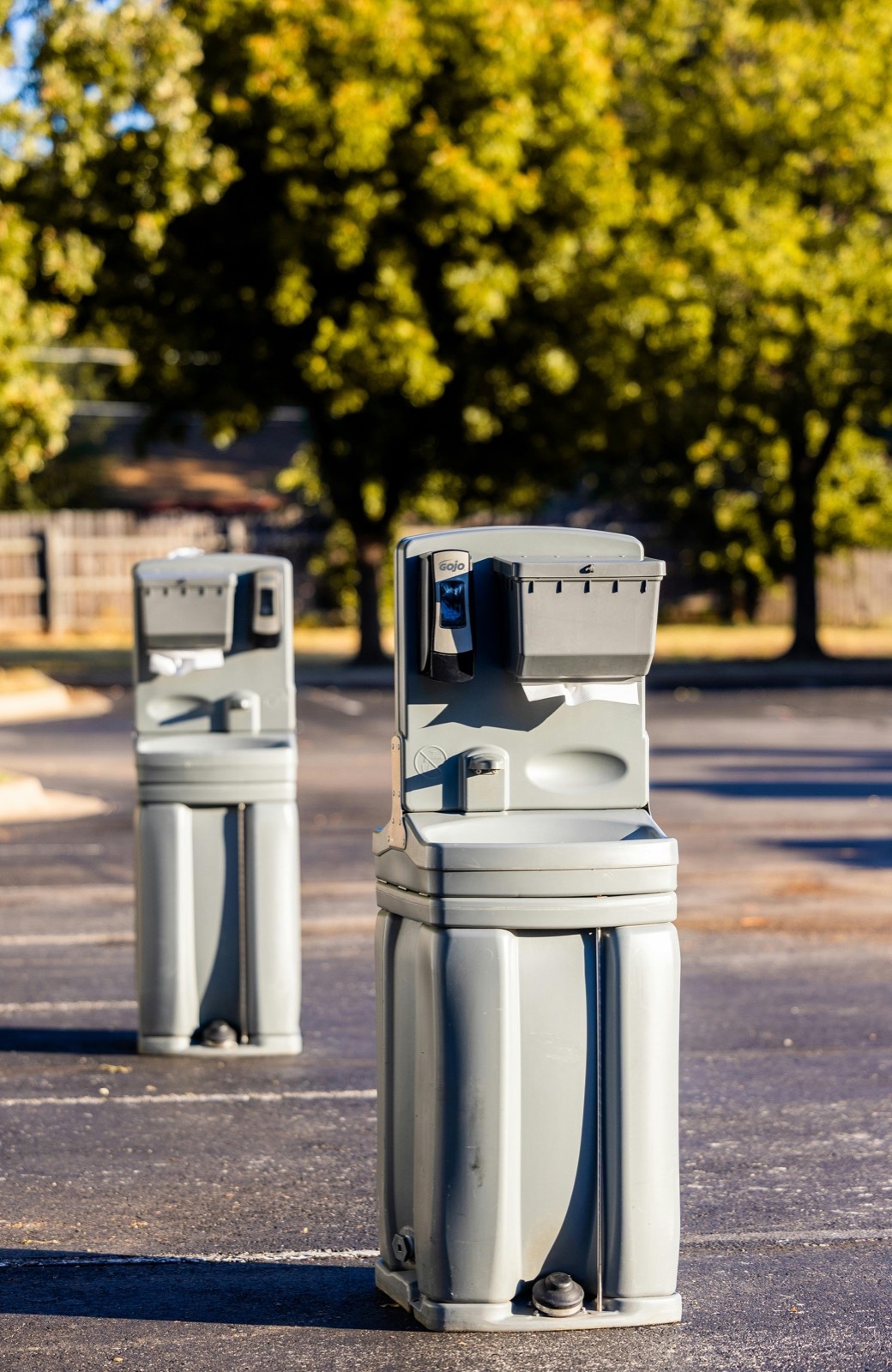
A sink that cannot be reached from a seated position defeats the point. Where handwashing is provided separately, an accessible-height portable sink belongs next to the accessible unit.
Construction sites and long rentals
On a job site the accessible unit goes on the same monthly rate and the same weekly service route as the standard portable restrooms, and gets repositioned as the accessible route through the site changes.
What An ADA Portable Restroom Costs
Accessible units cost more than standard ones because they are physically larger and there are fewer of them in any fleet. What moves the number:
- The premium over a standard unit. Expect a meaningful step up rather than a small one, driven by the size of the unit and the space it takes on the truck.
- How long you keep it. Event-day rates and monthly construction rates are very different, and the monthly rate on a long job is where accessible provision stops feeling expensive.
- How many. At larger events the planning figure is around five percent of total units with a minimum of one, distributed across the site rather than grouped.
- Ground preparation. Where there is no firm level surface, a mat or a temporary pad is the difference between a compliant unit and a box on grass. It is a small cost and it is not optional.
- Service frequency. Weekly is standard and included. Public events and heavy-use sites through the summer do better on more frequent servicing.
- Placement complexity. A unit that sits beside an existing path is straightforward. One that needs a route built to it, or repositioning as a site changes, takes more time.
You get a flat quote covering delivery, placement, weekly service and collection. Because accessible units are usually part of a larger order, we price them alongside the standard portable restrooms and the portable sinks so the whole provision is one number and one delivery.
Frequently Asked Questions
Do you offer ADA-compliant units?
Yes — ADA-accessible units are larger with ramps, grab bars, and extra interior space for wheelchair access. Many events and job sites are legally required to provide them. A standard unit does not satisfy the requirement no matter how new it is, because the door width, the entry height and the interior turning space are all different.
How is an accessible unit different from a standard one?
It is roughly five feet by five instead of four by four, the entry is level or ramped rather than stepped, the door is wide enough for a wheelchair, grab bars are fitted on the correct walls, and there is enough clear floor space inside to turn around with the door closed. Everything is reachable from a seated position.
How many accessible units do I need at an event?
At least one, and the usual planning figure at larger events is around five percent of the total unit count. They should be distributed across the restroom areas rather than grouped in one place, so nobody has to cross a festival site to reach one.
Does the ground matter?
It matters more than the unit. An accessible unit on grass, gravel or a slope, or with a curb between it and the path, is not accessible. It needs a firm level surface, a step-free approach from an accessible route, and clear space beside the door. We plan that in and bring mats or a pad where the site has nothing suitable.
Are accessible units required on construction sites?
On public projects, prevailing-wage work and most commercial contracts, yes. And on any site where a worker needs one, the site needs one regardless of contract language. They go on the same monthly rate and weekly service route as the rest of the units.
Is an accessible unit more expensive?
Yes, meaningfully — they are physically larger and there are fewer of them in any fleet. On a monthly construction rate the difference is modest against the total; on a single event day it is more noticeable. We quote it as part of the whole order rather than as a separate premium.
Can I get an accessible stall inside a trailer instead?
Yes. Where the event is already taking a restroom trailer, an accessible stall with ramp or lift entry, a wide door, grab bars and turning space is often the neater answer than a separate unit standing on its own.
Do you provide accessible handwashing too?
Yes. A sink at standing height defeats the purpose, so where handwashing is separate we put an accessible-height portable sink next to the accessible unit. It goes on the same order and the same delivery.
Get A Free Estimate
Tell us the site, the dates and roughly how many people will be using it, and we will send a free estimate back the same day. Call 916-619-1714 or fill in the form and we will do the rest.
Or call us now: 916-619-1714